
Insomnia often goes hand in hand with anxiety and low mood, creating a cycle where poor sleep worsens emotional well-being, and emotional stress makes a restful night’s sleep harder to find.
Pharmaceutical options offer only short-term symptomatic relief and have considerable risk of tolerance, withdrawal, and cognitive impairment.
A recent study* examined the neurobiological and molecular mechanisms of acupuncture, using an innovative combination of brainwave monitoring and monitoring of proteins in blood. The result show that electroacupuncture may help interrupt this cycle by supporting both sleep quality and nervous system regulation.
After electroacupuncture treatment, patients showed highly significant improvements in sleep quality, insomnia severity, anxiety, and depression scores, while helping to improve neurotransmitter balance. Objective sleep testing showed better sleep efficiency, fewer nighttime awakenings, and increased REM sleep.
Researchers found changes in brainwave activity and blood proteins linked to calmer nervous system activity, improved brain plasticity, and reduced neuronal stress. These findings show that electroacupuncture helps the brain shift toward healthier sleep and emotional regulation patterns, supporting synaptic plasticity and clearance of neurotoxic substances.
Potential benefits for acupuncture patients may include: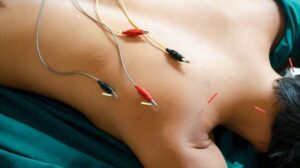
- Better sleep quality and fewer nighttime awakenings
- Reduced insomnia severity
- Support for anxiety and low mood associated with poor sleep
- Improved nervous system balance and relaxation
- A non-drug option that may help address underlying sleep-wake dysregulation
Overall, this research supports electroacupuncture as a promising, whole-person approach for people whose sleep difficulties are closely tied to stress, anxiety, or mood changes.
Reference
*Lin L, Zhao Y, Yang Y, et al. Electroacupuncture ameliorates insomnia with anxiety and depression via modulating slow-wave oscillation, neurotransmitter pathways, and complement system: insights from EEG and proteomics. J Affect Disord, 4 March 2026;405:121560.